What is AI, really? A steady, jargon-free tour.
Everyone's talking about AI. The words fly around — LLM, GPT, prompts, agents, AGI — and it's easy to feel like everyone got a memo you missed. You didn't. In the next few minutes, no maths and no jargon, you'll actually understand what all of it means. Deep breath. Here we go.
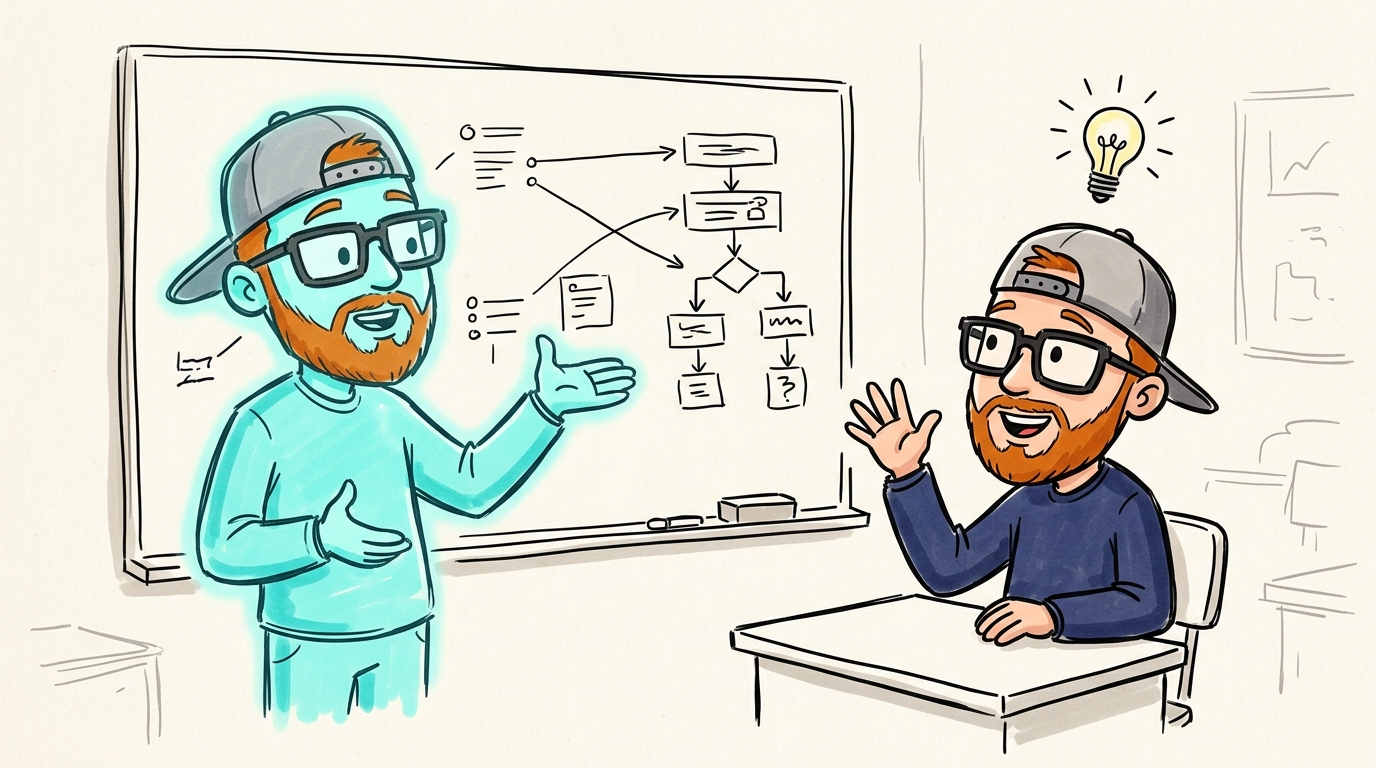
First — what even is "AI"?
Strip away the sci-fi and it's simpler than it sounds. AI is software that learned from a huge pile of examples, so it can do things that used to need a person — write, answer, summarise, suggest. The kind everyone means today is the sort you chat with: ChatGPT, Gemini, Claude and friends. You type, it replies, like texting a very well-read assistant.
What's an LLM? (the engine under the bonnet)
LLM = Large Language Model. It's the engine inside those chatbots — and here's the honest, slightly unglamorous truth of what it does:
It's a giant word-predictor. It read an enormous amount of text and learned which words tend to follow which. When you type, it predicts, word by word, the most likely helpful reply.
That's it. It's not a brain, it's not conscious, and it isn't "looking things up" like a search engine. It's pattern and prediction — astonishingly good, but prediction all the same.
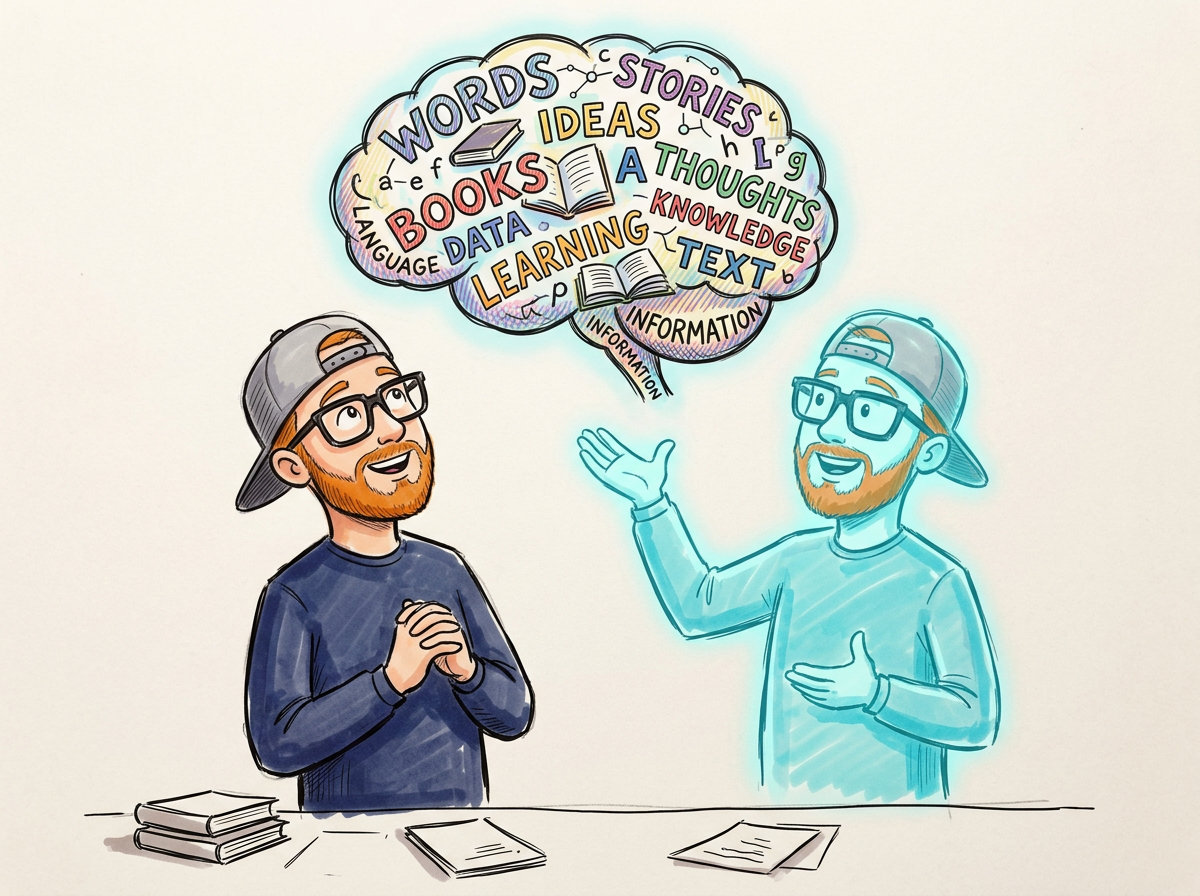
Once you know it's a word-predictor, a few things suddenly make sense: why it can sound totally confident and still be wrong (it's predicting plausible words, not checking facts), and why what you give it matters more than clever phrasing. More on both in our other posts.
What's a "prompt"?
The least scary word of the lot. A prompt is just what you type — your question or instruction. That's the whole thing. Talking to AI well isn't a secret skill; it's just briefing someone helpful: say what you want, give it the context, and nudge it if the first go isn't right.
Bots vs agents — one talks, one does
Here's a distinction worth having, because you'll hear "agent" everywhere now:
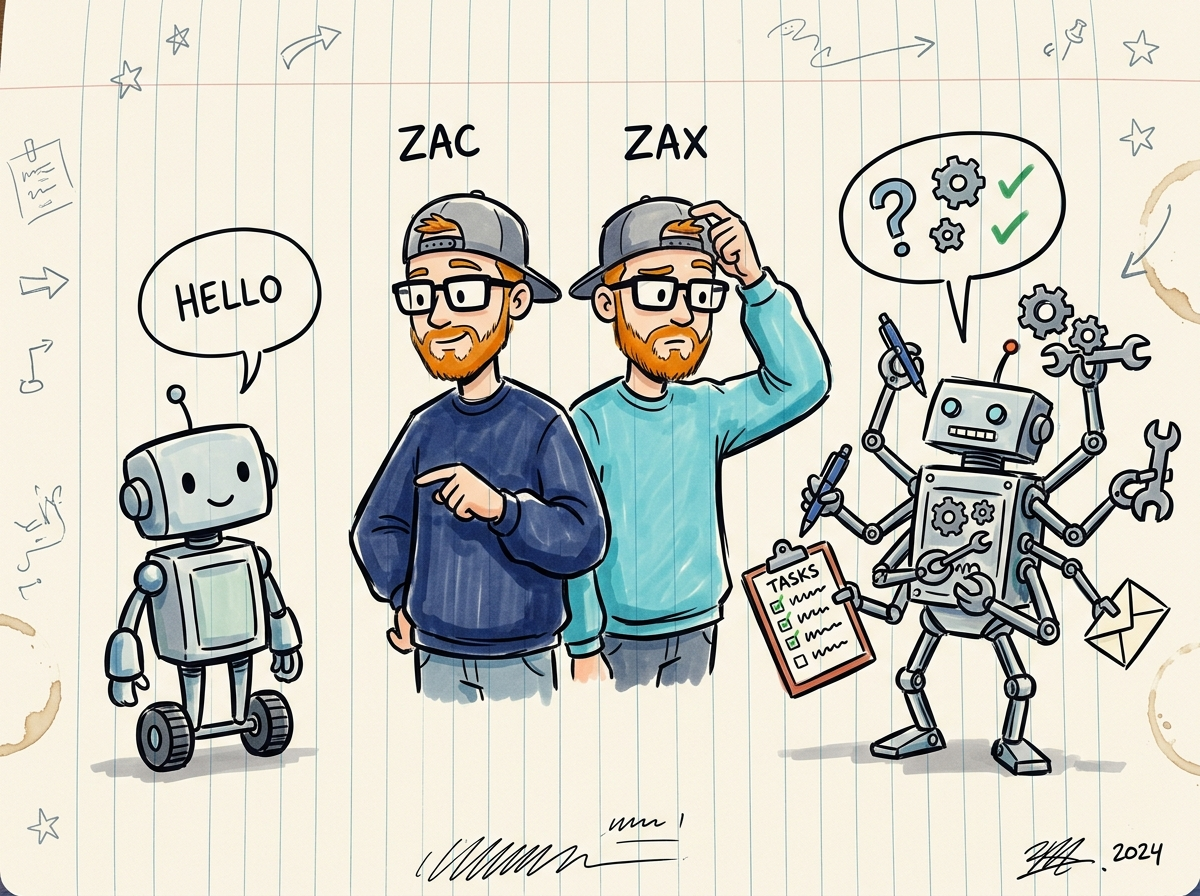
A bot (chatbot) talks — it answers you. An agent does — it can take actions on your behalf: use tools, fill things in, book, send, work through a task step by step.
A chatbot tells you how to plan your week. An agent could go and actually put it in your calendar. Agents are newer, more powerful, and where a lot of this is heading — but they're also where you want to stay in the driving seat.
And AGI — the one in the scary headlines
AGI = Artificial General Intelligence: a hypothetical AI as broadly capable as a person at basically everything — not just clever at one thing, but genuinely general. So here's the honest bit, because you'll see a lot of hype:
AGI is not here. Today's AI is powerful but narrow — brilliant at some things, clueless at others. And the experts flatly disagree on when (or whether) real AGI arrives: some say a few years, some say decades, some say never with today's approach.
So when a headline shouts that the robots are about to take over — take a breath. Nobody actually knows, and the tool in front of you today is exactly that: a tool. Useful, improving, and firmly under your control.

So… where do you actually start?
Not with a textbook. With a conversation. Open one free tool (ChatGPT or Gemini are great first homes), and ask it to help with one small real thing — a tricky email, a plan for tomorrow, something you want explained. Say what you want, give it the details, nudge it till it's right. That's you, using AI. Everything else is just building on that.
Want us to point you at your exact first step? The free 60-second audit shows where AI would help you most — plus a prompt and a mini-system to try today.
Take the free 60-second audit →— Zac (the human) & Zax (the AI)